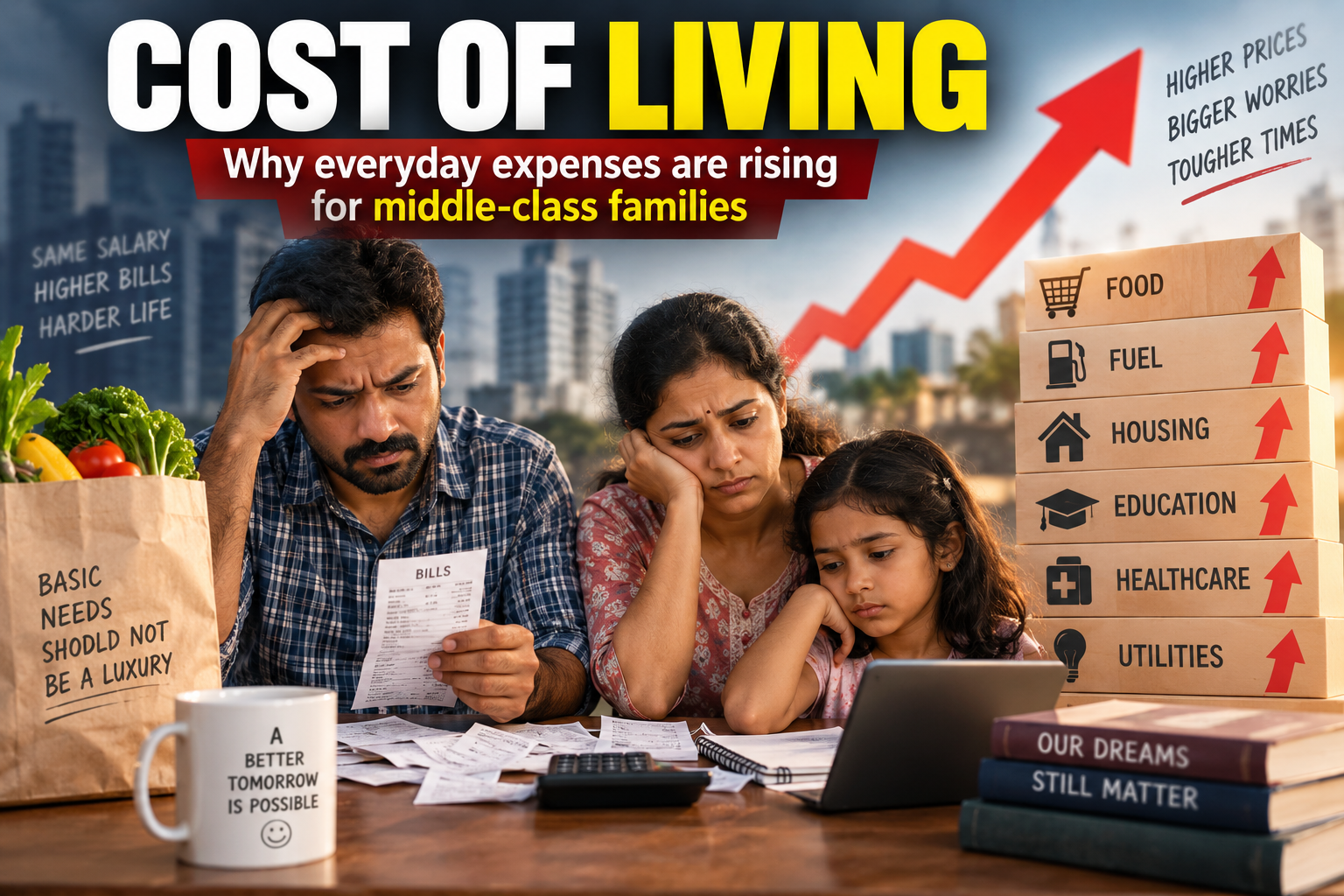
Cost of Living – Why Everyday Expenses Are Rising for Middle-Class Families
Middle-class families across both India and the United States are feeling the pinch of rising everyday expenses. From petrol pumps to grocery stores, the cost of maintaining a basic standard of living has surged, leaving many households struggling to balance budgets that were already stretched thin. This article explores the key drivers behind this surge and what it means for families navigating an increasingly expensive world.
The Global Squeeze on Household Budgets
In India, retail inflation is projected to hit a 20-month high of approximately 4.9% in August 2026, marking the third consecutive month above the Reserve Bank of India’s medium-term target. Wholesale inflation, while moderating slightly to an estimated 9.34%, remains elevated due to persistent cost pressures in core segments.
Meanwhile, in the United States, the Consumer Price Index rose 0.4% in August 2026, with annual inflation holding steady at 3.4%. Gasoline prices surged 27.4% year-over-year, accounting for over one-third of the monthly increase in the CPI.
These numbers translate into very real challenges for families who must allocate limited resources across fuel, food, housing, healthcare, and education.
Fuel Costs: The Domino That Topples Everything
Fuel prices have emerged as one of the most significant drivers of inflation. In India, petrol and diesel prices rose by nearly Rs 3.87 per litre in recent revisions, while CNG rates increased by Rs 3-Rs 4 per kilogram within a single month. Premium petrol in major metros has breached the Rs 120-per-litre mark.
The psychological impact of fuel price hikes cannot be overstated. As one analysis noted, even a modest increase in petrol prices sends an alarm signal through household budgets because fuel affects everything: freight costs rise, farmers spend more on diesel-powered pumps, and factories face higher generator bills.
The multiplier effect is profound. Diesel price increases push up the cost of transporting goods, which in turn raises the price of everything from vegetables to packaged snacks. A family that once ordered food twice a week now limits restaurant outings to once a month. Another postpones vehicle upgrades despite attractive dealership offers.
Food Inflation: The Kitchen Larder Under Pressure
Food prices have become a particularly sharp pain point. In India, food inflation accelerated to an estimated 8.14% in August from 6.64% in July, with wholesale sugar prices jumping approximately 14% during the month alone.
Vegetable prices tell a stark story. A bunch of coriander that sold for Rs 10-Rs 15 now costs Rs 25-Rs 30. French beans have jumped to Rs 250 per kilogram from Rs 120-Rs 150. Onion prices have climbed from Rs 60-Rs 65 to over Rs 80 in many areas.
Milk prices have also risen, with major brands like Amul and Mother Dairy increasing rates by Rs 2 per litre, citing higher transportation, packaging, and cattle feed costs.
The impact is visceral for families. As one Mumbai homemaker managing a family of five put it: “Every week, something becomes more expensive. Milk goes up, gas goes up, vegetables fluctuate daily, and now even soaps and snacks cost more. Salaries don’t increase this fast”.
In the United States, food inflation has eased slightly to 2.7% annually, but this provides little comfort when broader living costs continue climbing.
The Income-Inflation Gap: Stagnant Salaries Meet Rising Prices
Perhaps the most frustrating aspect of this crisis for middle-class families is the growing gap between income growth and the cost of living.
Data from over 1,500 listed companies in India reveals a troubling pattern: net sales rose by more than 10% and post-tax profits surged by 34%, yet salary bills increased by just 3.5%. Adjusted for inflation, the real purchasing power of employees increased by a measly 0.3% compared to the previous year.
This disconnect means that even employed middle-class families find their salaries exhausted quickly on basic needs alone. “Earlier, people could save some money after managing expenses, but now salaries get exhausted quickly on basic needs alone,” observed one resident.
The “Triple Squeeze” on Indian Households
Analysts describe the current situation as a “triple squeeze” of skyrocketing energy costs, unseasonal agricultural disruptions, and a stubborn interest rate cycle.
The war in West Asia and threats to the Strait of Hormuz have driven crude oil prices above $100 per barrel, acting like a tax on the entire economy. For a major oil importer like India, this creates cascading costs throughout the supply chain.
Simultaneously, erratic weather patterns have disrupted agricultural production. A rainfall deficit of 14% and lagging sowing progress pose upside risks to food prices heading into the festive season.
The third pillar of the squeeze is debt. With the rupee weakening and the RBI maintaining a hawkish stance to prevent capital flight, interest rate cuts have been sidelined. For homeowners with floating-rate mortgages, this translates into a “silent interest hike.” An average home loan of Rs 50 lakh has seen monthly EMI obligations increase by approximately Rs 4,500 over the last year.
How Families Are Adapting
The middle class is responding with a defensive crouch. Consumer behavior is shifting toward what analysts call a “survival economy.”
Shoppers are hesitating longer at supermarket aisles, skipping big-ticket purchases, and gravitating toward discount racks. FMCG companies report record sales of “mini-sachets” as households move from bulk buying to daily cash flow management.
There’s also a surge in what’s being called the “electric kitchen” revolution, with induction cooktop sales outstripping gas stoves for the first time as families hedge against unpredictable LPG prices.
For many, the strategy is simply cutting back. “The only option now is to cut down the shopping list,” said one Kandivali resident.
What Comes Next
The outlook offers little immediate relief. UBI Research warns that wholesale inflation will remain elevated in the near term, driven by supply chain disruptions and persistent cost pressures. The festive season could bring further food price increases if monsoon deficits persist.
In the United States, core inflation has eased to its lowest reading since March 2021, but headline inflation remains sticky due to energy costs. Market analysts suggest the Federal Reserve still faces pressure to maintain restrictive monetary policy.
For middle-class families, the path forward requires both resilience and adaptation. Budgeting strategies that prioritize essentials, reduce discretionary spending, and build emergency buffers become not just prudent but necessary. Understanding the forces driving these cost increases—from global oil markets to domestic weather patterns—can help families anticipate and plan for what may come next.
The middle-class squeeze is no longer an abstract economic concept. It’s a lived reality measured in every grocery receipt, every fuel fill-up, and every monthly budget that seems to shrink a little more each quarter.