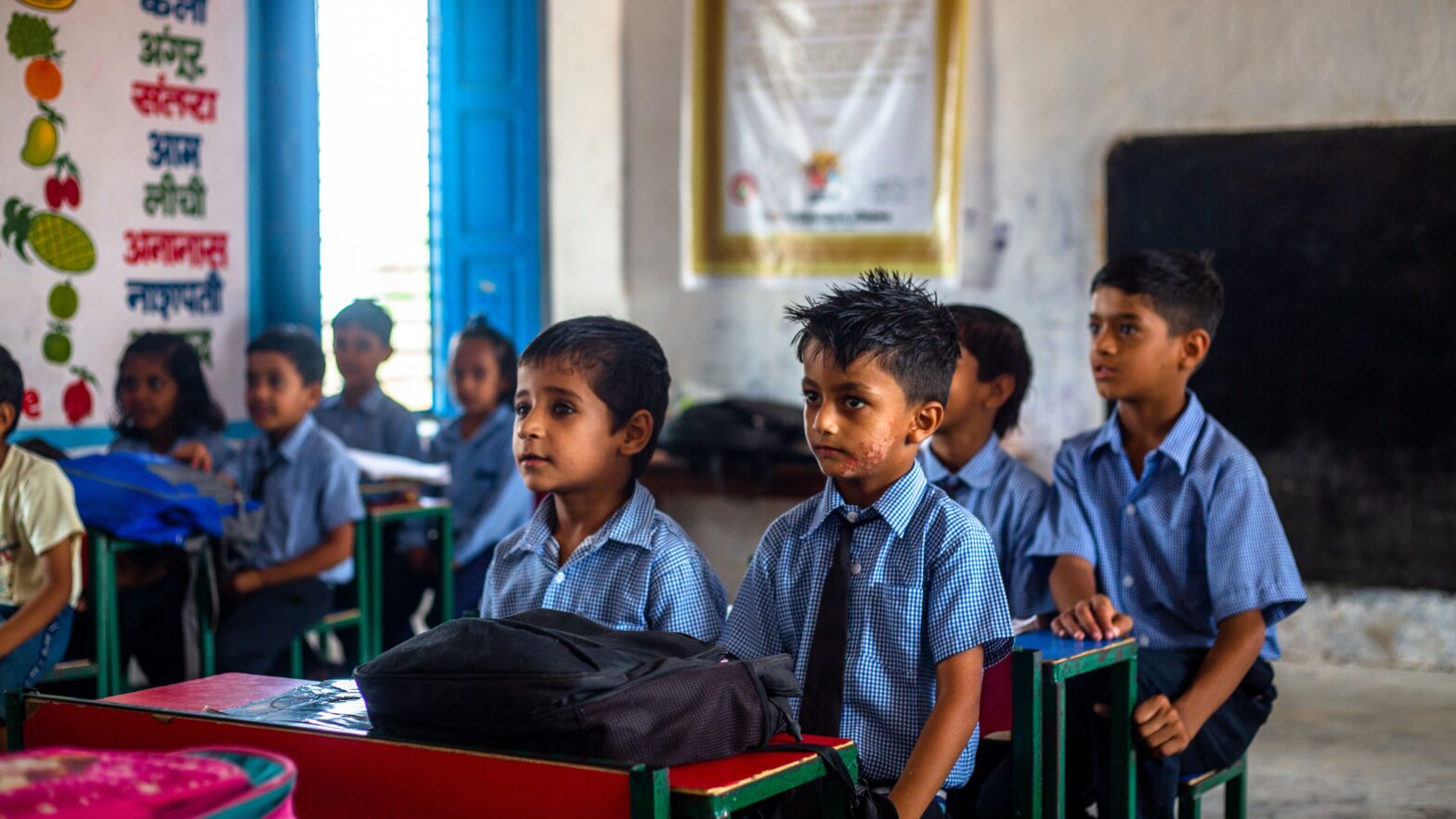
India’s Education System Is Broken. Here’s Why Nobody Talks About It.
Millions of degrees. Millions of unemployed graduates. Something doesn’t add up.
India has 1.5 million schools. Nearly 300 million students. One of the largest education systems on the planet.
And yet — fresh graduates can’t write a proper email. Engineers can’t code. MBA holders can’t communicate. Parents are going broke paying fees for degrees that go nowhere.
How did we get here? Let’s break it down.
🏛️ We’re Still Running a 190-Year-Old System
Here’s something nobody puts in the textbook:
India’s education system was designed by the British — specifically to create obedient clerks for a colonial government. Not thinkers. Not innovators. Clerks.
That was 1835.
We gained independence in 1947. But the system? It barely changed. Same exam pattern. Same memorization-first approach. Same “sit down, listen, don’t question” classroom culture.
We fought for freedom. We forgot to free our classrooms.
📖 We Teach Kids to Memorize. Not to Think.
Ask a Class 10 student to explain why photosynthesis matters in real life.
Most will recite the definition word for word from the textbook.
Ask them to explain it in their own words? Blank stare.
That’s the system working exactly as designed.
Students who memorize score higher. Students who think and paraphrase lose marks. So children quickly learn — remembering is rewarded, thinking is risky.
By the time they’re adults, the habit of asking “why” has been completely trained out of them.
😰 Exams Aren’t Assessment. They’re Survival Tests.
In India, one exam can define your entire future.
- Score 95%? You’re a success.
- Score 75%? Your relatives look at you differently.
- Score 60%? Some students don’t make it to the next morning.
Every year, exam results trigger a wave of student suicides across the country. A system that kills its students hasn’t just failed academically — it has failed as a human institution.
Meanwhile, what do these exams actually test? The ability to reproduce textbook paragraphs under pressure.
Not creativity. Not communication. Not character. Just memory under stress.
🏫 Two Indias. One Exam Paper.
Picture two students sitting the same entrance exam:
Student A — South Delhi. Private school. Air-conditioned classroom. Experienced teachers. Coaching institute. Personal laptop. Internet access since age 7.
Student B — Rural Bihar. Government school. 80 students per classroom. One teacher covering three grades. No library. No electricity some days. Textbooks from 5 years ago.
Same exam. Completely different lives.
We call the results “merit.” But merit doesn’t exist in a vacuum. When the starting line is this unequal, the race is already over before it begins.
👩🏫 We Don’t Value Teachers. Then We Wonder Why Education Fails.
Quick question — what do the best education systems in the world (Finland, Singapore, Japan) have in common?
They treat teachers like professionals. High pay. Rigorous training. Respected careers.
In India?
- Contract teachers earn as little as ₹5,000–8,000 a month
- Teacher recruitment is often political, not merit-based
- Professional development is a checkbox, not a culture
- The brightest graduates run toward engineering and civil services — not classrooms
You cannot build a world-class education system on an underpaid, undervalued workforce.
Until teaching becomes a career that attracts talented, passionate people — and keeps them — nothing changes.
📚 The Curriculum Is Living in 1995
Flip through an Indian school textbook. Notice anything?
The world outside has changed completely. AI, climate crisis, financial systems, digital communication, mental health — none of it exists in the standard curriculum.
What does exist? Chapters that haven’t been meaningfully updated in decades.
And the bag keeps getting heavier. More subjects. More chapters. More to memorize. But less understanding of anything that actually matters in the real world.
Financial literacy? Not taught.
Communication skills? Not assessed.
Critical thinking? Not rewarded.
Emotional intelligence? Not even acknowledged.
We’re preparing students for a world that no longer exists.
💸 Private Schools Sold a Dream. Many Delivered a Bill.
“English medium school” became a status symbol. Parents stretched budgets, took loans, sacrificed savings — all for schools with the right signboard.
Many of those schools delivered exactly that: a signboard.
Same rote learning. Same exam pressure. Same outdated approach — but now with higher fees and an English-language WhatsApp group for parents.
The private education boom didn’t fix Indian education. In many cases, it commercialized the failure and charged a premium for it.
🎓 Degrees ≠ Skills. India Has Millions of Certificates Proving It.
India produces roughly 1.5 million engineers every year.
Employers say only a fraction are ready to actually work as engineers.
Same story across fields. Law graduates who can’t argue a case. Science graduates who’ve never done a real experiment. English literature graduates who struggle to write a clear paragraph.
The degree became the goal. Learning became optional.
When the certificate matters more than the competence, education has lost its purpose.
💡 What Actually Needs to Change
Not another government scheme. Not another education policy announcement. Real change.
→ Stop treating exams as the only measure of a student’s worth
→ Pay teachers well and train them properly
→ Update the curriculum for the world students will actually live in
→ Build real infrastructure in rural schools — not just on paper
→ Make room for questions, creativity, and failure in classrooms
→ Bridge the language gap — don’t use it as a filter
None of this is impossible. Countries have done it. The question is whether India is willing to prioritize its students over its bureaucratic inertia.
The Bottom Line
India has the youngest population in the world. That’s either the greatest opportunity in history — or a ticking clock.
A well-educated generation can transform this country. A generation that was processed through a broken system, carrying certificates but no real skills, will struggle — and so will the nation.
The problem isn’t that Indian students aren’t smart enough.
The problem is that the system was never designed to help them be.
That needs to change. Not in the next policy cycle. Now.
💬 What do you think? Share your experience with Indian education in the comments below.